The Cost of Knowing How the Dead Died
Every answer takes something with it.
Jon Madigan
4/28/20261 min read
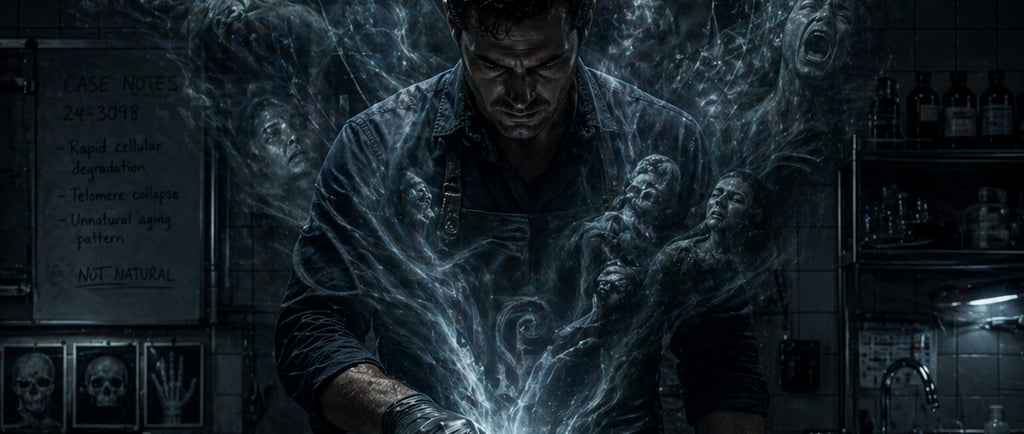
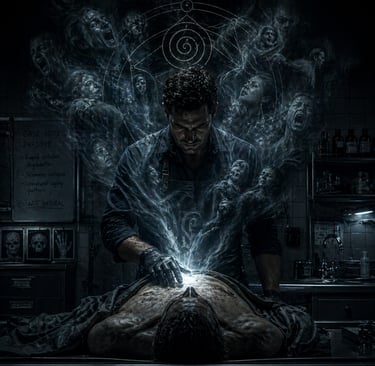
Nick Hayes has a gift. That’s what people would call it, if they understood it.
He touches the dead and relives their final moments—what they saw, what they felt, how they died. Not as a vision. Not as a theory. As memory. It’s precise. Clinical. Useful. And it’s destroying him.
Every death leaves something behind. Not just images, but fragments—fear that doesn’t belong to him, pain that lingers too long, emotions that don’t fade when they should. Migraines. Nosebleeds. Gaps in time. And sometimes worse.
The problem isn’t just what he sees. It’s what he brings back. Because the dead don’t always stay contained. In most cases, the ability gives him answers no one else can get. It closes cases. It makes him valuable. But in others, it opens doors. Doors into things that aren’t supposed to be visible at all.
Nick’s job is to document the dead. But the longer he does it, the clearer it becomes: He’s not just observing what happened. He’s interacting with something that notices him back.